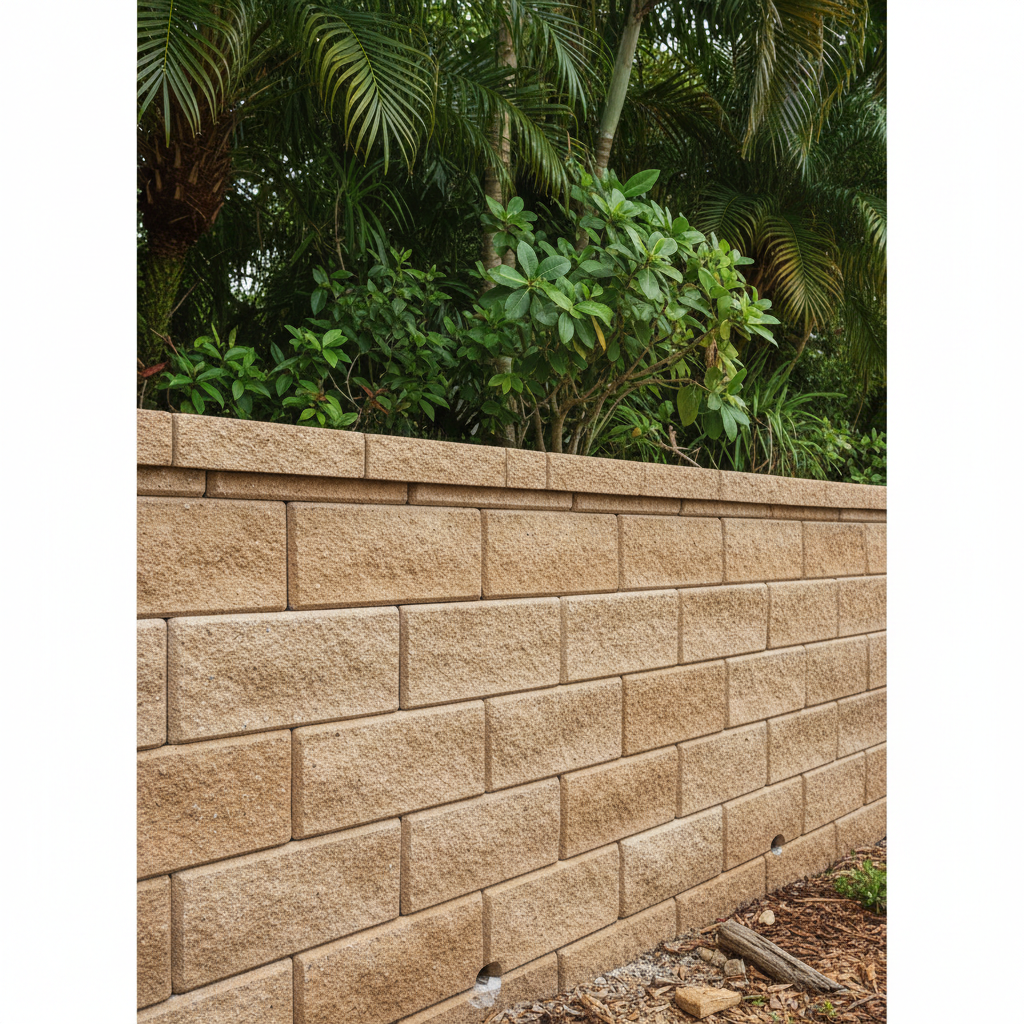
Thinking About a Retaining Wall? Here's the Deal.
So, you're looking at your yard. Maybe you've got a slope you want to tame, or you're just itching to create some usable, flat space. A retaining wall often feels like the perfect solution, doesn't it? And it usually is! But let's be real, it's not quite as simple as just stacking a few blocks.
As a structural engineer right here in Cape Coral, I've seen every kind of retaining wall imaginable – the good, the bad, and the downright scary. Let's talk about what you really need to know before you even think about digging that first shovel.
First things first, what's this wall actually for? Is it just a pretty border, holding back a small flower bed? Or is it doing some serious work, like keeping a big pile of soil in place, maybe even supporting your driveway or part of your house's foundation? That's the biggest question you can ask, because it pretty much decides everything else. You can probably handle a small, non-structural wall yourself, no problem. But anything bigger, anything that could cause real damage if it fails? That's your cue to hit pause and call in a pro.
Before You Start: Planning and Permits
Before you even buy a single block, you absolutely have to plan. And I mean *really* plan. For anything more than a small, decorative wall—we're talking under 2 feet high and definitely not near any existing structures—you're going to need a permit from the City of Cape Coral. To get that permit, you'll need engineered drawings. This isn't just a bureaucratic hurdle, by the way; it's all about safety. A poorly designed retaining wall can fail, causing property damage, injuries, or even worse. And with the sandy, sometimes unstable soil we have around here, especially close to our canals, you just can't afford to guess.
So, what do I look at when I'm designing a retaining wall? Good question:
- Soil conditions: What's the dirt like? Is it loose sand, clay, or something else entirely? This really changes how much pressure the wall has to hold back and how deep its foundation needs to be.
- Drainage: Water, my friends, is the archenemy of retaining walls. If you don't have proper drainage behind the wall, water will build up. That creates immense pressure, hydrostatic pressure specifically, and it can push the wall right over. Trust me, it's no joke.
- Surcharge loads: Is there anything on top of the soil the wall is holding back? A driveway, a swimming pool, maybe even a building? All that extra weight adds to the pressure on the wall.
- Wall height and material: Taller walls naturally need much stronger designs. Block, concrete, timber – each option has its own strengths and weaknesses.
For these kinds of calculations and designs, you really need a licensed structural engineer. That's exactly where a company like Cape Coral Structural Engineering comes in. We'll check out your site, design a wall that meets code and will actually stand up to the forces it'll face, and then provide all the drawings you need for permitting.
During the Project: What You Can Do
Once you've got your plans and permits, if it's a small, non-structural wall, you can totally get your hands dirty. Digging the trench, laying the base, stacking the blocks – that's all very doable DIY work. Just make sure your base is level and compacted. Use good drainage material like gravel behind the wall, and put in a perforated pipe if your design calls for it. Always follow the manufacturer's instructions for the blocks you're using. And hey, don't cut corners on the backfill; compact it in layers.
For bigger, engineered walls, you're probably going to hire a contractor. Even then, you can be a smart homeowner. Understand the plans. Ask questions! Make sure they're following the engineered drawings exactly. Pay attention to how they install the drainage system. Is the gravel clean? Is the pipe sloped correctly? Are they compacting the backfill in lifts, as they should?
After It's Built: Maintenance Matters
A retaining wall isn't something you just build and forget about. You really need to keep an eye on it. Look for any signs of trouble:
- Cracks: Small hairline cracks might be normal, but any big or widening cracks are a definite red flag.
- Bulging or leaning: If the wall starts to lean forward or bulge out, that means it's under too much pressure and could fail.
- Water issues: Is water pooling behind or at the base of the wall? Is it constantly wet? Your drainage might be clogged or just not enough.
- Erosion: Is soil washing out from under or through the wall?
If you see any of these signs, especially on a larger, structural wall, don't wait around. Get a professional opinion. Sometimes it's an easy fix, but often, these are signs of bigger problems that need a structural engineer to diagnose and design a repair. Ignoring them will only lead to more expensive and dangerous issues down the road, and who needs that?
Building a retaining wall can really add a lot of value and function to your property here in Cape Coral, but doing it right is absolutely crucial. Don't underestimate the forces of nature, especially with our heavy rains and the kind of soil we've got. Plan smart, know when to call a pro, and keep an eye on your investment.