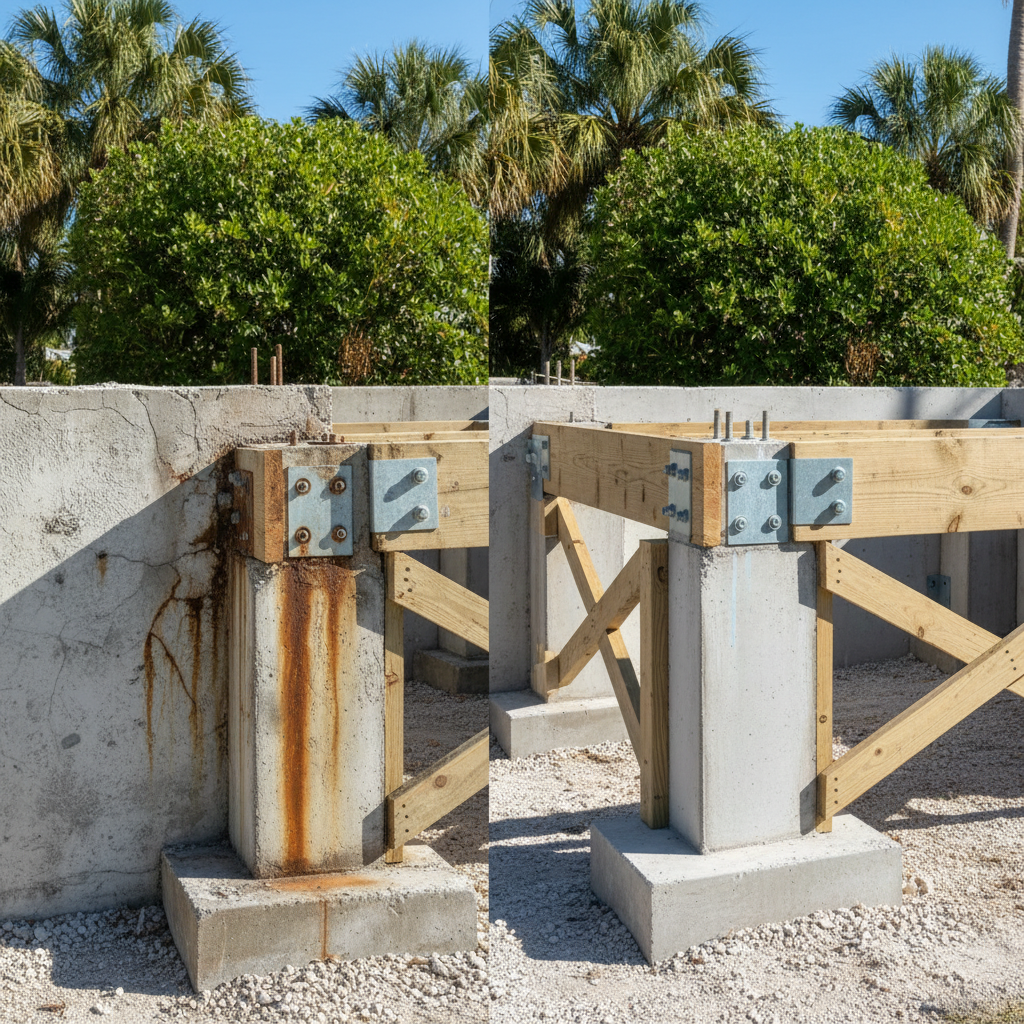
Alright, let's talk seismic retrofitting. I know what you're probably thinking: "Seismic? In Florida?" Look, we don't get earthquakes like California, but the ground here, especially with our sandy, often saturated soil, can still shift. And when you've got a hurricane bearing down, that lateral force can put a real strain on your foundation and framing. So, protecting your home from those forces, whether it's wind or ground movement, is just smart. You've generally got two main ways to go about it: anchor straps or shear walls. Let's dig into what each one means for your Cape Coral home.
Anchor Straps: The Quick & Cost-Effective Fix
Anchor straps are usually the first thing folks consider, and for good reason. They're typically less invasive and quicker to put in. Think of them as heavy-duty metal connectors that tie your house's frame directly to its foundation. We're talking about bolting steel plates or straps from your sill plate – that's the wood beam sitting right on your concrete foundation – right down into the foundation itself. Sometimes, we'll even use them to connect different levels of your home, just to be thorough.
- Cost: This is where straps often win. They're generally the cheaper option upfront. Less material, less labor, less disruption. If you're on a tighter budget or your home's risk isn't super high, straps can be a really effective solution to improve its stability.
- Durability: They're durable, no doubt. Made of galvanized steel, they're designed to resist corrosion, which is a big deal here with our humidity. They do a good job of preventing your house from sliding off its foundation during a lateral event.
- Maintenance: Practically zero. Once they're in and inspected, you don't really have to think about them again. They're usually hidden inside your walls or in the crawl space, out of sight, out of mind.
- Appearance: You won't see them. They're installed internally, so your home's curb appeal stays exactly the same.
The downside? While straps are great for preventing your house from separating from its foundation, they don't necessarily stiffen the entire structure against racking – that's when the whole house tries to parallelogram under force. They're like seatbelts; they keep you in place, but they don't make the car itself more rigid.
Shear Walls: The Robust & Comprehensive Solution
Now, shear walls are a different beast. These are specially designed walls, often plywood or OSB sheathed, that are built to resist lateral forces. Instead of just tying things together, a shear wall actually creates a rigid diaphragm in your structure. It's like adding a strong, unmoving backbone to your house.
- Cost: Expect to pay more for shear walls. They involve more materials – lumber, specialized sheathing, more fasteners – and a lot more labor. We're often opening up walls, doing framing work, and then closing everything back up. This can get expensive fast, especially if we're working on multiple sections of your home.
- Durability: This is where shear walls shine. They're incredibly durable and provide a much higher level of structural integrity against lateral forces. They distribute those forces over a larger area, making the whole structure much more resistant to twisting and deforming. For homes in areas like the Yacht Club neighborhood, where you're really exposed to the elements, this added rigidity can be a lifesaver.
- Maintenance: Again, once they're built and covered, maintenance is essentially non-existent. They're part of your home's structure.
- Appearance: Like straps, they're usually hidden within your existing wall cavities, so they don't impact your home's look. The only time they might affect appearance is during construction if we have to remove and replace drywall.
The biggest benefit of shear walls is the comprehensive protection they offer. They don't just hold your house down; they make it a much stronger, more cohesive unit against strong winds or ground movement.
Which One's Right for Your Cape Coral Home?
Look, I've seen a lot of homes here in Cape Coral, and honestly, there's no one-size-fits-all answer. It really boils down to a few things:
- Your home's existing construction: Older homes, especially those built before modern hurricane codes, often benefit more from the comprehensive approach of shear walls. Newer homes might just need some strategic strapping.
- Your budget: If cost is a major factor, straps are a solid starting point.
- Your risk tolerance: How much protection do you want? If you want the absolute best defense against lateral forces, shear walls are the way to go.
- What your structural engineer recommends: This is key. Before you do anything, you need a professional assessment. We at Cape Coral Structural Engineering can come out, look at your specific home, its age, its location, and its current structural integrity. We'll give you an honest evaluation and lay out the best options for your situation.
For most homes in Cape Coral, especially those built to more recent codes, a well-designed system of anchor straps can provide excellent protection against uplift and sliding off the foundation. It's a great bang for your buck. However, if your home is older, has known structural vulnerabilities, or you're just looking for the absolute strongest defense against those relentless Southwest Florida storms, then shear walls are the superior option for overall structural rigidity. Don't guess. Get a professional opinion tailored to your property.